2 liens privés

Le burn-out n’a pas d’existence médicale. Il s'agit d'une dépression, particulièrement brutale. L'ampleur du phénomène est cependant devenue révélatrice : notre rapport au travail a évolué, comme les méthodes de management et les organisations des entreprises. À tel point que la souffrance psychique est devenue le premier motif de consultations du réseau Souffrance au travail en France.
Pour comprendre cet effondrement professionnel mais également personnel, Elsa Fayner, réalisatrice du documentaire, a choisi d’écouter celles et ceux qui l’ont éprouvé dans leur chair, au plus près de leur parole, au plus sensible de leur histoire.
Cinq personnes témoignent - une cadre bancaire, un cuisinier, une assistante sociale, un travailleur humanitaire et un berger - dont les propos sont étayés par les analyses de sociologues et de psychologues afin de mieux comprendre l'origine, les étapes et les caractéristiques de ce mal au nom nouveau.
Un film d'Elsa Fayner


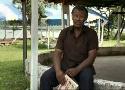
Ce documentaire fait partie des instruments éducatifs destinés à informer les populations africaines sur les réalités de leur quotidien. Les gens pensent par erreur qu'il suffit de se lever et d'aller créer une usine en Afrique et que les autres vont les accueillir les bras ouverts. Ce qui manque ne sont pas les idées d'affaires, mais les bonnes stratégies pour les mettre en application sans se faire écraser par ces mastodontes.
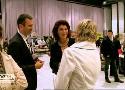
Saison 2 Episode 3 : Les récoltes de la honte
La part de l'alimentation dans le budget des ménages français a baissé d'un tiers en cinquante ans. Cette pression à la baisse sur les prix de l'alimentation a-t-elle un coût social pour les travailleurs de cette filière ? Pendant huit mois, le journaliste Wandrille Lanos et la rédaction ont enquêté sur les conditions de travail dans l'agroalimentaire. En partant des allées des supermarchés, pour remonter jusqu'à la main d'oeuvre qui récolte, ramasse ou pêche pour les consommateurs, ils ont découvert un monde où l'exploitation est la règle. Au coeur de l'Union européenne, les salaires ne sont pas conformes au droit du travail, les conditions d'exploitation sont proches de l'esclavage.
Elise Lucet
France 2

Elvis Summers crowdfunded $100,000 to build dozens of tiny homes. City officials looking to pass a $2 billion housing plan tried to shut him down.
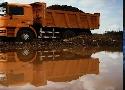
Decades after the European powers carved up the African continent for their own imperial needs, Africa is undergoing a new wave of resource and strategic exploitation – some are calling it the new scramble for Africa.
The United States is increasing its footprint across Africa with AFRICOM, fighting terrorism and ensuring stability are the trumpeted motivations. Resource security is a more hushed objective.
But it is not just about the US.
During the last decade, China's trade with Africa not only caught up with America's, it has more than doubled it.
The new battle for Africa does not deploy strong-arm tactics, it is now a soft power game: economic and humanitarian aid, interest-free loans, preferential trade agreements and investments in infrastructure are currency across a continent that is, for the world's established and emerging powers, seemingly up for grabs.
India, Brazil and Russia are all invested in Africa's present and future, and old imperial powers like France are fixing to retain their loosening grip on the riches of former colonies.
So what does all this mean for Africa and Africans?
Empire travels to Kenya to examine the continent at the centre of the world as it is courted, cajoled and carved up by global powers to its East and West.
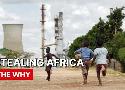
Rüschlikon is a village in Switzerland with a very low tax rate and very wealthy residents. But it receives more tax revenue than it can use. This is largely thanks to one resident - Ivan Glasenberg, CEO of Glencore, whose copper mines in Zambia are not generating a large bounty tax revenue for the Zambians. Zambia has the 3rd largest copper reserves in the world, but 60% of the population live on less than $1 a day and 80% are unemployed. Based on original research into public documents, STEALING AFRICA is an investigative story of global trade and political corruption where money and natural resources only flow one way, and in the meantime poverty becomes harder to escape.
Filmmaker: Christoffer Guldbrandsen
Producer: Henrik Veileborg
Produced by Guldbrandsen Film
Released: 2012
This film was originally released as part of THE WHY series WHY POVERTY?. Learn more about the project: https://www.thewhy.dk/projects/why-poverty

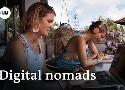
Working online whilst traveling the world sounds like a dream job for many people. But what exactly is a digital nomad? Pete and Supi live as digital nomads.
They travel the world permanently, work on the road and are always online. Their lives epitomize the digital revolution and how it is changing how we work live.
Many people dream of living and working on the road - a dream that has come true for Pete and Supi. Driven by a passion for travel, they set out to escape the dreary routine of everyday life. They want to achieve maximum self-fulfilment without big safety nets and full-cover insurance, in a nomadic world of adventure. Pete is a DJ, so parties and big cities are a defining part of his life, whereas Suparni aka Supi is the opposite; she’s looking for spirituality and awareness. The two show us the huge spectrum of opportunities that the world of the digital nomad has to offer. Despite their fundamental differences, they both earn their living by working remotely. The digital age has made this way of life possible: without the Internet, it would be almost unthinkable. But their lifestyle does have its limits, as is becoming especially evident to Suparni with her plans for parenthood. But it's hard to find someone you love who also loves the same sort of lifestyle, and the constant travel is a big obstacle.